 OctoView Labs
For financial institutions
Banks and market-infrastructure firms are under real pressure to let AI agents build and maintain production systems, and under regulatory obligations written for a world where a person could always be asked what happened. Topos closes that gap: it is the layer that makes agent-built systems answerable to the people who remain accountable for them.
The questions that will be asked
When something in a regulated pipeline changes, a reporting rule, a reconciliation, a release, the questions from compliance, internal audit, or a supervisory authority are always the same:
Who authorised this change? Not which ticket. Which named person, with what standing, and where is the durable record of the authorisation.
What verified it? Independently of whoever made it, and with what evidence. Not "the build was green," but what was checked, by what, against what.
What evidence do you hold? Months later, when the people involved have moved on, can the institution reconstruct what happened from records a third party will accept?
Most AI-assisted engineering pipelines cannot answer any of the three. Chat transcripts are not evidence. Commit messages are not authorization. A green build is not a verdict. The engineering benefit of agents is real; the accountability layer simply was never built. Topos is that layer.
What Topos holds, so the answers exist
Every substantive change begins as a registered intent in plain language. Policy acts, meaning approvals, overrides and scope changes, carry a named operator's signature before they take effect. Completion claims must present evidence or are refused at the boundary, and the refusals are themselves preserved. All of it lands in an append-only, hash-chained ledger from which every report is derived and against which every claim can be re-checked. The result is an evidentiary record that exists before anyone asks for it.
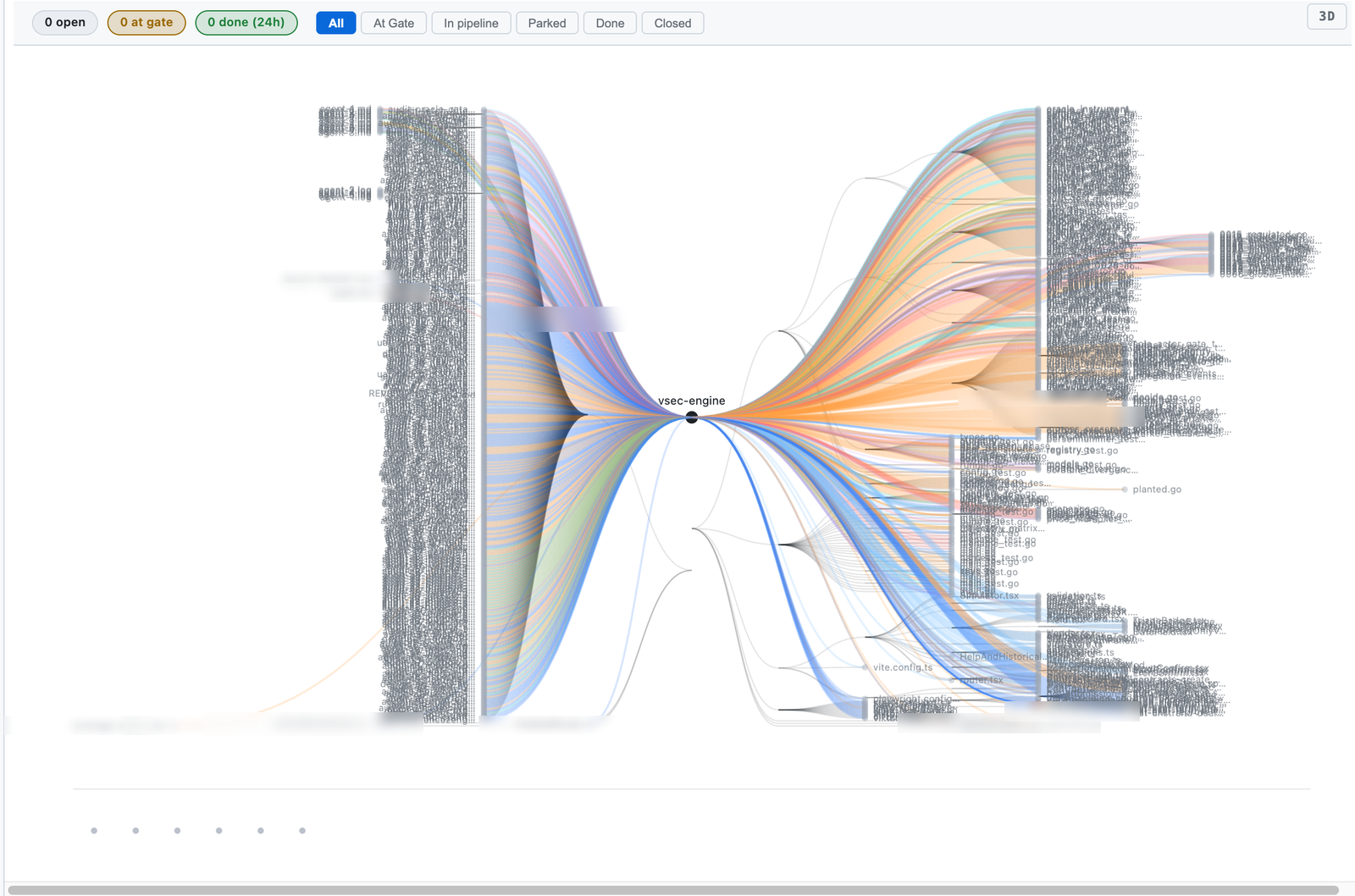
Forged in regulatory reporting, not adapted to it
Our engineering discipline runs EMIR Refit trade reporting live at REGIS-TR since May 2026 for a Swedish financial institution: full trade lifecycle, counterparty delegation, reconciliation, with pipelines on Google Cloud. That is work where being wrong is reportable, and it is where the habits behind Topos come from: assume the record will be read by someone who was not there, does not trust you, and is entitled to an answer. Topos governs the AI agents that build and maintain such systems, and it is built by its own agents under its own rules, releases included.
Deployment reality
Self-hosted inside your perimeter or managed by us; data residency and retention configured per institution; the full audit ledger behind a typed API so your own risk and audit functions can read it directly. Topos runs alongside your existing pipeline rather than replacing it. The agents you adopt, whatever they are, work under its rules. Engagements are taken on a design-partner basis: the substrate is shaped by real regulated workloads, not assumptions about them.